Tarsila do Amaral.
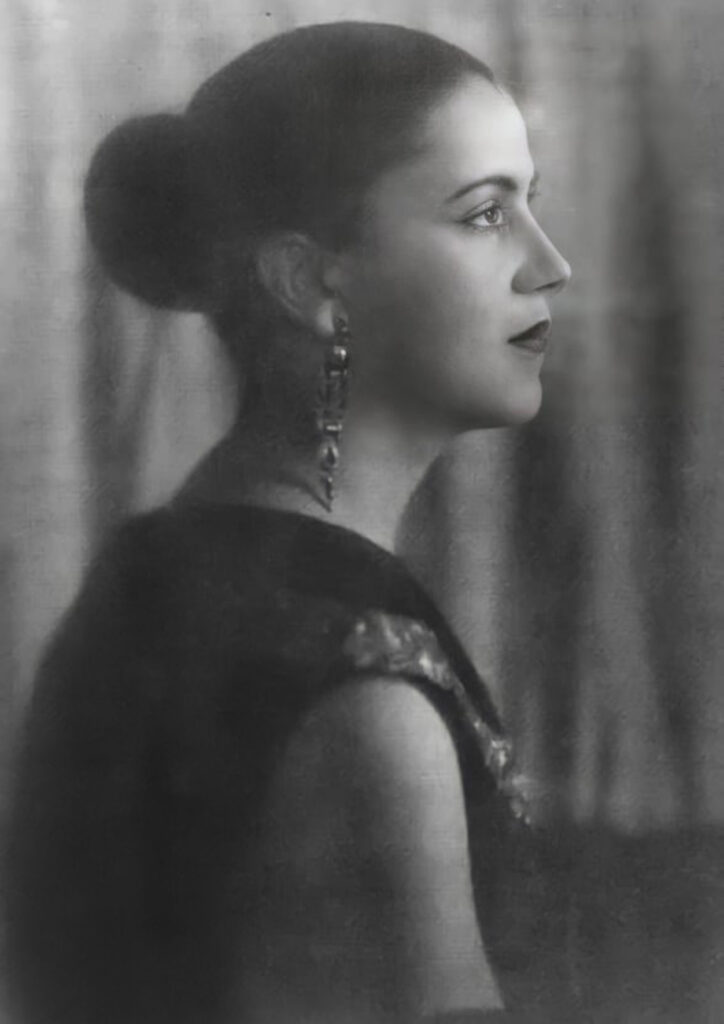
Tarsila do Amaral gave shape to modern Brazil. From her first Parisian canvases of the 1920s to the Antropofagia cycle, she invented a visual language that digests the European avant-garde to return it as tropical colour, backcountry landscape and monumental figure.
Trained in Paris in the studios of Fernand Léger, André Lhote and Albert Gleizes, she returned to São Paulo determined to be the painter of her country. With Oswald de Andrade she launched the Anthropophagite Movement in 1928: Abaporu, the figure with enormous feet planted in the earth, became the founding image of an entire Brazilian modernity.
Galeria Harmonia has represented a selected group of works and studies by Tarsila since 2018, with an emphasis on the canvases of the Pau-Brasil period.
Selected works.
Across the index, works are held as fields of color. The full reproduction opens on each work's own page; where a painting remains under copyright, its entry stands in for the image.
-
2026Geometrias
Insubmissas.Galeria Harmonia, São Paulo -
2024Tarsila
Antropófaga.Galeria Harmonia, São Paulo -
2021Modernas:
três países, uma rupturaGaleria Harmonia, São Paulo -
2019Tarsila
e o BrasilGaleria Harmonia, São Paulo -
1998Modernismo
InsurgenteGaleria Harmonia, São Paulo (inaugural)